










Aircraft cleaning is one of the most overlooked parts of aircraft turnaround. Not a lot of aviation professionals are keen to look at how planes are reset for every departure, yet it sits alongside some of the most time-sensitive ground activities.
When an aircraft is in the parking bay or on the apron, ground servicing begins. Multiple teams move in simultaneously – unloading and reloading baggage and cargo, carrying out technical checks, refuelling, replenishing catering, and cleaning the cabin.
Cabin cleaning for routine turnaround
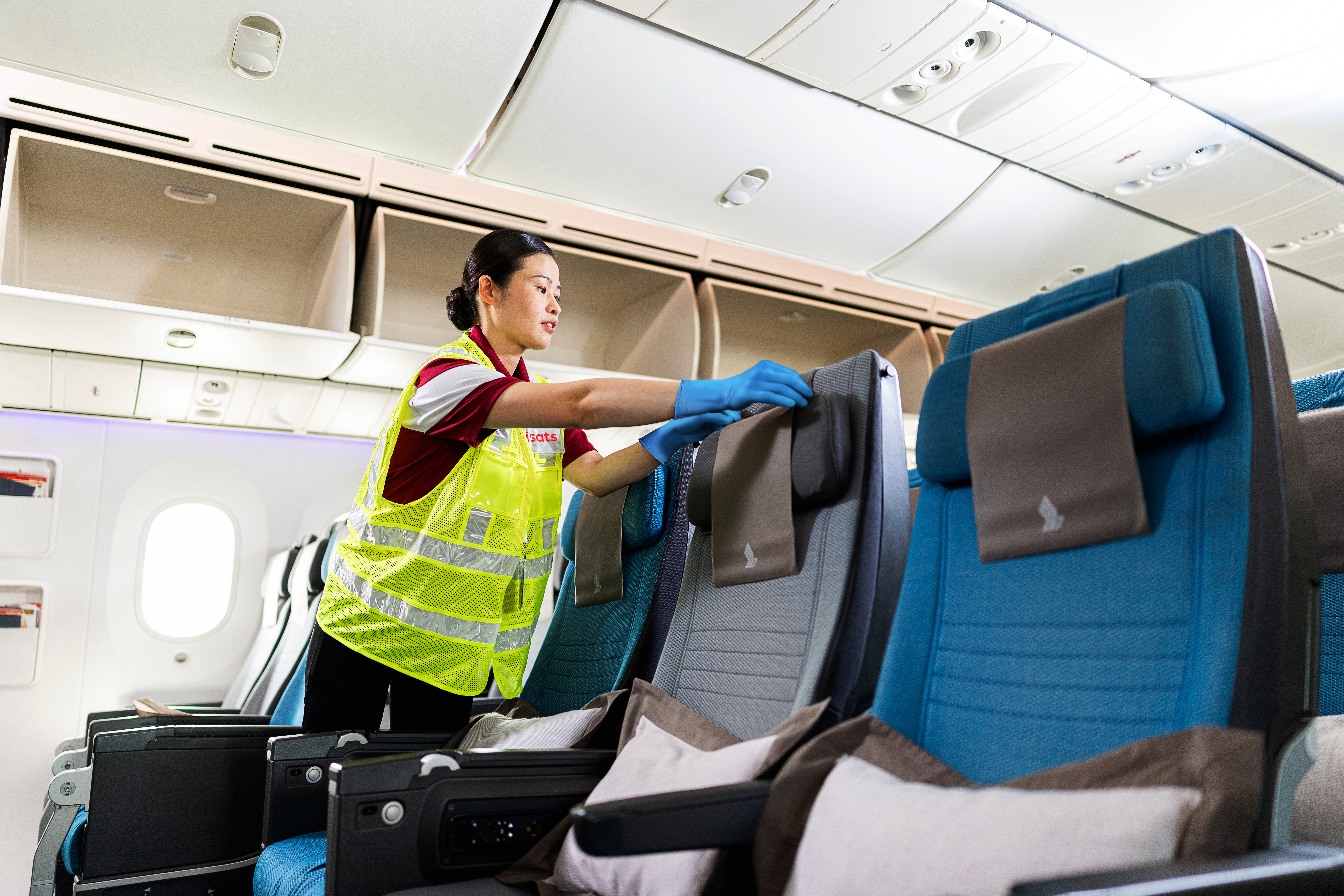
Cabin cleaning is often associated with quick turnarounds – tidying seats, clearing waste, resetting the cabin. But in practice, it varies depending on the operation and flight conditions.
For standard turnarounds, the process typically follows a sequence:
∙ Waste collection and removal
∙ Seat pocket clearing and surface wipe-down
∙ Lavatory cleaning and restocking
∙ Galley clean-up
∙ Final inspection before boarding
All of this is carried out against the clock, while other ground teams are also performing their tasks.
Cabin cleaning teams begin work immediately after passengers disembark, but the surrounding activities can constrain their pace. Cabin crew may be moving through the cabin, while other ground staff may be discussing with the flight crew. In most cases, the entire turnaround window is around 45 minutes, sometimes 25 minutes at most for low-cost carriers, leaving little margin for delay.
Working without power
One of the less visible challenges is that cleaning often takes place without aircraft power or a ground power unit (GPU). Without power, cabin lighting may be limited or unavailable, air circulation systems are off, and equipment that relies on onboard power cannot be used. To compensate, cleaning teams bring portable lighting, battery-powered cleaning tools, and manual equipment for basic cleaning tasks. This affects both their speed and visibility. In some cases, teams rely on experience more than systems, knowing where issues are most likely to be without full cabin lighting.
When irregular situations demand a different approach
Not all cleaning follows a standard routine. Some situations need additional work, checks, and coordination. For example, severe turbulence can make a mess of the cabin with things all over the place and spills that need extra cleaning. If the flight encounters a medical emergency, the cleaning team may need to do targeted sanitation or use protective equipment when carrying out their duties.
Passenger death, though rare, requires strict handling and isolation protocols, along with controlled access to affected sections of the aircraft. In such cases, cleaning is no longer just about speed. It becomes a more controlled process, often involving additional steps and coordination with other ground teams, or in some cases, the authorities.
Aircraft exterior cleaning operations
While cabin cleaning is closely tied to turnaround timelines, exterior cleaning operates on a different schedule. Sometimes called aircraft washing, exterior cleaning is usually carried out overnight, during extended ground time, or during maintenance windows. But it is no less operationally important. Exterior cleaning not only helps keep aircraft look spick and span, but it is also crucial in maintaining aerodynamic efficiency and improving visibility for
routine ground inspections.
Planes are usually washed every two to three months, but this can differ depending on where the aircraft often operates. For example, more frequent exterior wash is required for those that fly near saltwater. In the past, exterior cleaning was largely manual, using large volumes of water and big teams to
operate equipment and climb heights to ensure the fuselage is thoroughly cleaned. Now, more operators and airlines are working to make the process more sustainable and efficient.
Where technology is changing the process
This is where noticeable change is taking place. New systems, including semi-automated and automated washing solutions, are reshaping how
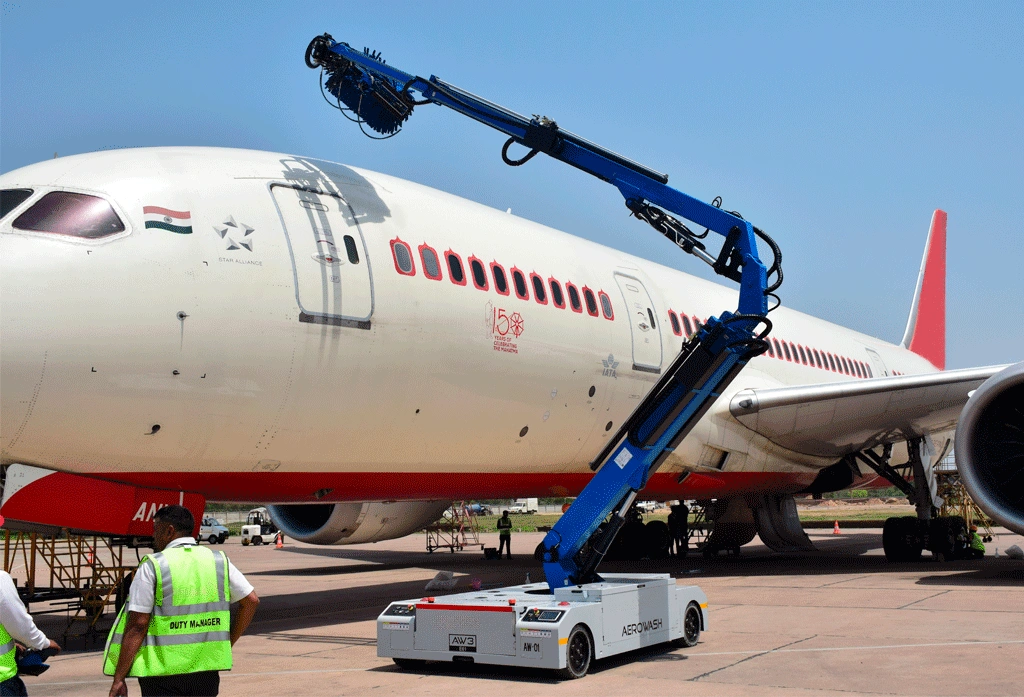
aircraft exterior cleaning is done. These technologies can clean the aircraft faster, with better results, and more sustainably. For example, Aerowash systems, used by some ground handlers today, apply dry-wash techniques that significantly reduce water consumption. It is also battery-operated and uses plant-based cleaning solutions, thereby with less carbon footprint.
Automated wash rigs such as those in Aerowash also help reduce labor-intensive work. Not only do they allow cleaning solutions to be applied more evenly across the fuselage, but they also keep ground operators safer as manual work at height is not required. Still, the adoption of newer technologies for aircraft exterior cleaning varies depending on infrastructure, costs, and operational constraints in airports around the world.
Cleaning as part of the turnaround ecosystem
Aircraft cleaning, both cabin and exterior, is not a standalone task. It sits within a wider sequence of ground operations that all compete for time and space. Cleaning teams often work after one team has partially finished, before another team needs access, or in conditions that are not always ideal. While aircraft cleaning may seem routine, it is evolving in quieter ways compared to other parts
of aviation.
On the cabin side, tools and workflows are improving efficiency and teams are adapting to different aircraft layouts. On the exterior side, sustainability is quickly influencing cleaning methods, and automation is gradually reducing reliance on manual labor. Even so, the objective remains: delivering consistent results within tight operational windows.
Final thought
Aircraft cleaning sits at a point where operational pressure meets execution. It is shaped less by high-level strategy and more by what can realistically be done in the time available. Whether inside the cabin or on the exterior, the work depends on coordination, timing, and adaptability – often in changing conditions from one flight to the next. When it works well, it goes largely unnoticed, yet it plays a quiet and essential role in keeping business aviation operations moving.